
I am writing this on the tail end of twenty-one days of corporate prayer and fasting that my church has undertaken. I’ll admit, I was full speed ahead for the first week. I fasted from sunup to sundown, and God absolutely met me in my daily “more than usual.”
But around day ten, a familiar, heavy shadow started to creep in. My work week got slammed, and instead of those quiet moments of reflection, I found myself simply white-knuckling it. I was refraining from food not out of authentic devotion, but because I was terrified of “failing” the challenge and feeling the shame that comes with it.
Growing up in a strict evangelical household, I learned early that “good” Christians perform. I’m competitive by nature, and for years, I used “over-performing” in everything to compensate for the shame and guilt I felt about my lifestyle. I used confirmation bias to validate my “if it feels good, do it” outlook on life.
Sitting there on day twelve, hungry and irritable, I realized I had drifted straight back into legalistic territory. I had turned a relationship into a transaction. My prayer life hadn’t become a conversation; it had become a performance.
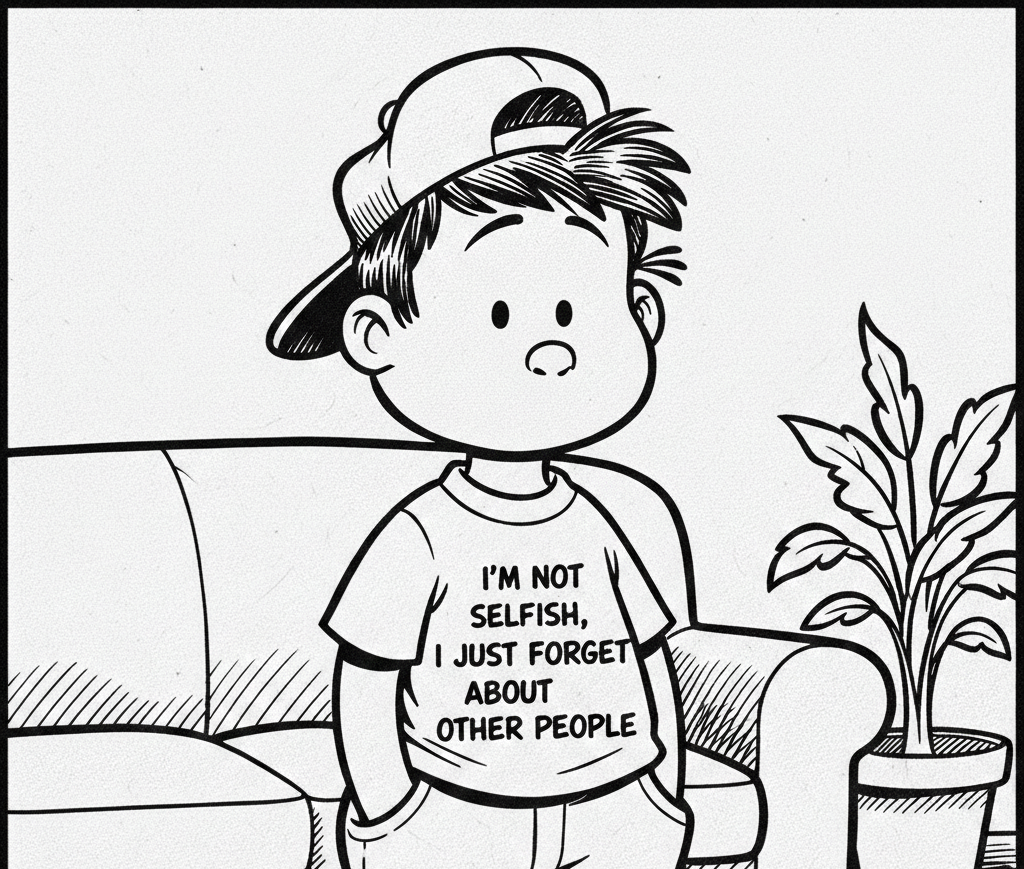
This sparked a question for me. Why does prayer often feel like a grocery list or a spiritual performance? Why are we so obsessed with “hearing a voice” or “claiming a blessing” while our souls remain burnt out and spiritually starving? It turns out, we are living through a massive sociological shift that has transformed the “hallowing of the Divine name” into a self-centered pursuit of the American Dream.
The “Cosmic Concierge” and the Individualistic Shift
We breathe the air of radical individualism. In our culture, the “American Dream” (defined by financial security and self-made success) has been baptized and brought into the sanctuary. We have re-imagined the Creator as a “personal cosmic concierge,” a facilitator whose primary function is to smooth our path to material comfort and success.
This shift is not just stylistic; it is a theological dislocation. We have moved from the “class-conscious Christ” who championed the poor to a version of Jesus who validates our personal successes and shows His approval by bestowing rewards from our “treat yourself” stockpile.
When we approach God with a predetermined outcome and refuse any answer that doesn’t fit our “success” narrative, we lose the freedom required for actual spiritual growth. We are no longer praying to be changed; we are praying to be comfortable.
The Allure and the Danger of the “Quiet”
In our exhaustion, many of us have turned toward “listening prayer”. It sounds like the perfect antidote to rote religion. a tree lined, two-way street where we wait for a direct “word”. For those of us raised on cold doctrinal statements, this promise of an immediate encounter feels like rain in the desert.
However, we must tread carefully. While the child Samuel said, “Speak, Lord, for your servant is listening,” he was responding to an objective divine voice, not just an internal “nudge”. Today, the practice often involves “mind-emptying” to facilitate illumination. The risk here is profound: we can easily mistake the products of our own self-delusion, our cravings, our fears, and our ego for the voice of God.
True biblical prayer is an intelligent, rational act. The apostle Paul noted that he would pray with both his spirit and his mind (1 Corinthians 14:15). If our “listening” leads us toward “new revelations” that bypass the sufficiency of Scripture, we aren’t finding intimacy; we are finding a mirror.
The Gethsemane Paradigm: The Fight to Stop Fighting
If you want to know what real prayer looks like when the stakes are infinite, look at Gethsemane. Gethsemane means “the olive press,” and it is there that the ultimate counter-narrative to self-centered prayer was written.
Jesus wasn’t in the garden “manifesting” His best life. He was in agony. He possessed a human will that naturally desired to avoid the “cup” of suffering. Yet, He chose to deny that desire in favor of God’s greater purpose. His prayer, “Not my will, but yours be done”, was both an active fight and a passive relinquishment.
True prayer is a “fight to stop fighting” God. While modern, often “selfish” prayer seeks to use God to avoid the “olive press” entirely, the biblical model shows us that the press is exactly where our submission is perfected. We are heard not because we have the right “vibe,” but because we are asking according to His will.

Restoring the Guardrails: The Power of “We”
Why does our prayer feel so “anemic” and local? It is partly because we have abandoned the liturgical structures that used to act as “guardrails” for the heart.
Historically, the “Prayer of the Faithful” was a central component of worship. It forced the congregation to look outward. Focusing on the universal church, to suffering leaders, and to the world’s most vulnerable before they ever whispered their own requests. This structure prevented prayer from becoming a “grocery list” of personal opinions.
We also need the “Collect”. This ancient form of prayer requires the believer to remember God’s past faithfulness before making a current request. It reorients the mind toward the objective character of God. Without these communal anchors, our prayer life becomes a private, idiosyncratic exercise fueled by the consumerist drive for acquisition and position.
The Ethics of Your Inner Room
What you pray for matters, not just for your soul, but for the world. Research shows that “petitionary” prayer born only out of distress can actually hinder psychological maturity if it isn’t balanced by adoration and thanksgiving.
You might be wondering, “Does this mean I shouldn’t ask God for help with my mortgage or my job search?” Of course not. But there is a massive difference between “trusting dependence for basic sustenance” and “using God as a utility for acquisition”. The Lord’s Prayer teaches us to ask for “daily bread,” which reinforces moderation and dependency.
When we pray selfishly, we reinforce a lack of social responsibility; when we pray according to the Kingdom, we find our place in the communal sacrifice.
The End of You is the Beginning of Him
The point of prayer is not to inform an omniscient God of your shopping list. It is to draw you into a close relationship of obedience and submission where we can begin to emulate God’s character. While “listening prayer” offers a response to the sterility of habitual petition, it must be guarded by the objective authority of the Word.
If your prayer life feels like a performance, stop. If you are striving your way through a spiritual discipline just to prove you can, let go. The “olive press” is not a place of punishment; it is the place where you are reshaped into the likeness of Christ.
One simple, doable next step:
Tomorrow morning, don’t start with your specific requests. Instead:
- Pause: Take a moment to think of exactly who you are addressing.
- Recall: Remember His past faithfulness (e.g., “…who has never failed to provide for Your children…”).
- Ask: Ask Him to change your mind about how you should pray (e.g., “…grant me the grace to seek Your will today.”).
- Yield: Yield to the Holy Spirit as He guides your heart to perfect peace and to be a blessing to others no matter what the day brings.
Start your transformation. Write God a “blank check” and let Him fill in the content of your life.
Leave a Reply